
After I secured my MA in English at LSU in 1980, I took a teaching position at an un-air-conditioned elementary school north of Baton Rouge. As a Language Development teacher I was part of a state program that helped children who were “culturally deprived.” I gave no grades and used puppets and a small record player to sing songs as we worked on vocabulary building, letter recognition, and basic reading skills. I worked with small groups of kids between 5-7 years old who came to me for 30-minute classes each day.

The school was a long building in the countryside with one classroom for each grade (K thru 8). Recess time for kindergarteners was in a small field next to a fenced area of cows. The mooing of our bovine neighbors mixed with the whirr of electric fans. The population was 98.9% African-American. I remember an extra tall kindergarten boy who was “mixed” and one pale, blonde second grader.

My students spent most of their lives in the rural area they called home. When we took the kindergarteners for a field trip to Baton Rouge, the biggest Wow! was the escalator at the mall where we had lunch. A few five-year-olds needed help getting on and off the moving stairs, but others wanted to ride up and down more times than they could count.
I became friends with Molly, the kindergarten teacher, because I worked with her whole class, and we shared lunch while her kids napped on dark blue mats. I helped her color 3-foot high cardboard cut-outs of the Alphabet Kids. I loved coloring as we chatted. I knew the kindergarten class best since I only worked with a few first and second graders.
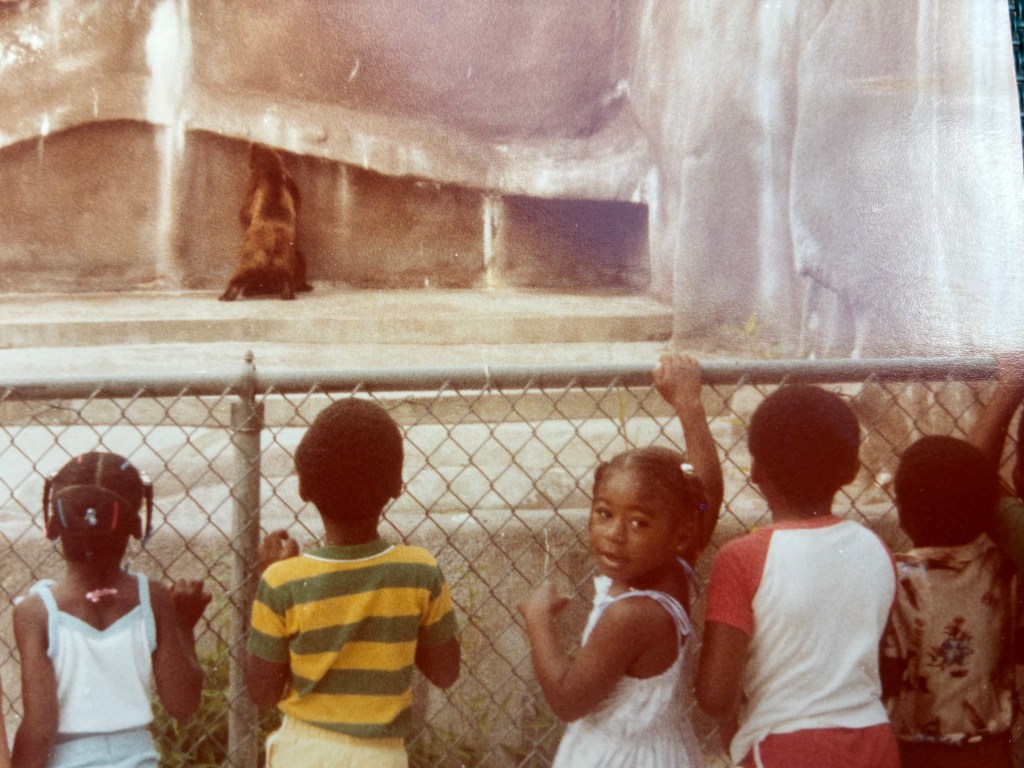
I remember David who rarely slept on his blue mat. He stayed quiet while squirming and searching the room for another wakeful peer; however, all the other kids had entered the Land of Nod. I smiled often at Sammy, a chubby boy who was first to fall asleep flat on his back with his mouth half- open to make him appear more vulnerable than those who curled into balls or hugged a treasured stuffed animal from home. Sammy was a cute, yet tough bundle of energy when he wasn’t napping. He had a husky laugh and lots of friends. When I had Sammy in my class he sang confidently during the puppet songs and I believed we got along like cheese and crackers.
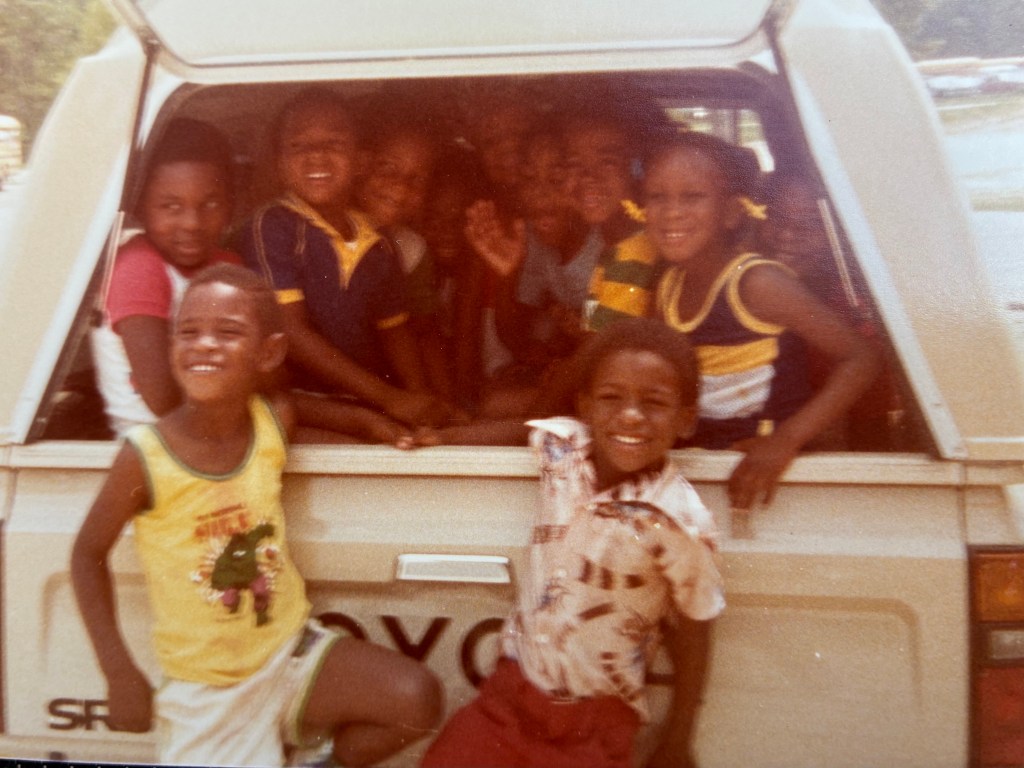
One humid afternoon I helped Molly with a line of five-year-olds as they waited for the school bus or a parent to take them home. (Kindergarten got out an hour earlier than the rest of the school). Each child had a note pinned to his/her shirt with details about our upcoming field trip. Sammy was kicking up gravel as he waited. I smiled at him and squatted to be eye-level. “Sammy, you excited about going to Baton Rouge next week?”
He continued kicking pebbles and surprised me with, “Momma told me don’t trust a white person farther than I can throw ‘em.”
Maybe he had seen his mother’s car pull up and didn’t want to be caught talking to me. Maybe I had corrected his pronunciation in my class earlier that day. In a moment Sammy went from being a student I felt comfortable with to someone I didn’t know.
For the first time I felt a smidgen of judgement based on the color of my skin. I never had a run-in with any parent that school year. I got only positive feedback from my principal. I thought I was a decent elementary teacher, even if my diploma said “Secondary School English.” But Sammy made me face the separation of races in Louisiana in the 1980s. I did not think I held prejudice in my heart. However, I grew up around racism in my hometown. Sammy’s mother’s beliefs came from her own experiences, and she was teaching her son how to navigate the world she lived in.

Back then no one used the triggering term “woke,” but Sammy opened me to living Atticus Finch’s advice in To Kill a Mockingbird– “You never really understand another person until you consider things from his point of view…until you climb into his skin and walk around in it.”
I had a sheltered upbringing when it came to other cultures. My segregated hometown and a Catholic school education kept me ignorant in some ways. I thought I trusted, accepted, and understood people from different races. But teaching in several schools with diverse populations, I got “schooled” by my students and their families. And teaching teens with lives so unlike my own made me a better person.
The quote “Be a person on whom nothing is lost” by Henry James helps me seek new ways to understand other people and to accept our differences. I will never understand prejudice the way those who lived it have, yet I can be open-minded to their ideas and accept them for who they are…..even if they don’t trust me.

 Sittin' Ugly Sistahs