Posted in #Confessions, #Teaching

The Late Start

My 5th birthday party

            I think I’m a good person.  I play fair, clean up after myself, wash my hands before I eat, and I don’t take things that aren’t mine.  I think I turned out okay even though I never got to go to kindergarten.

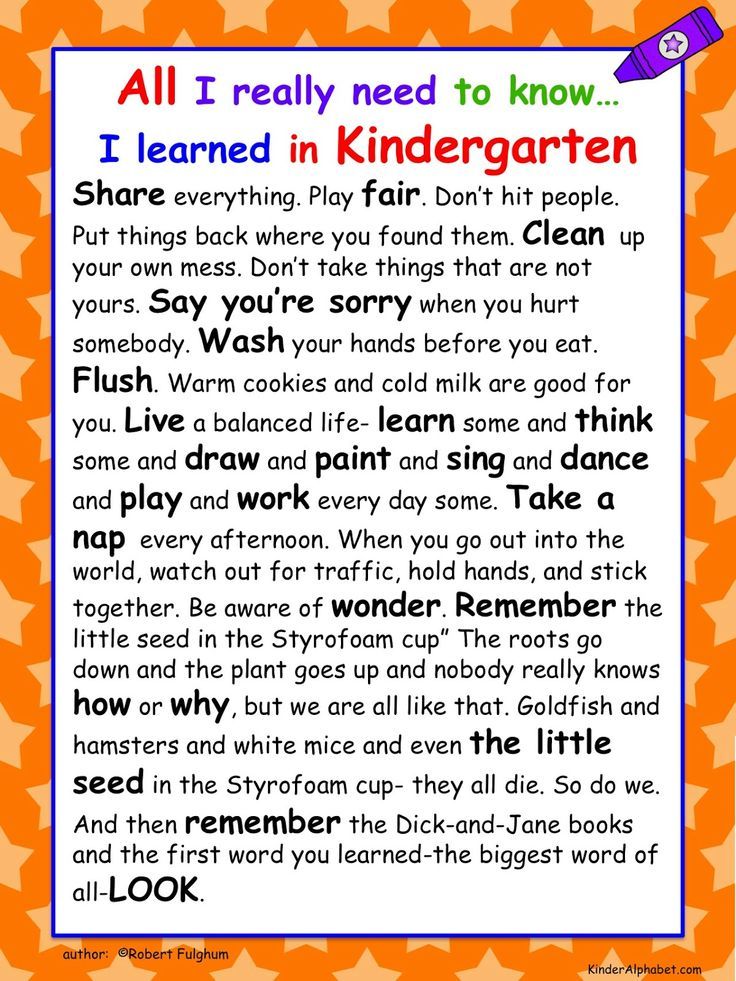
            Robert Fulghum wrote a little book entitled, “All I Really Need to Know I Learned in Kindergarten.”   He advises that we all learn lessons about life in kindergarten.  My lessons might have come a little later, but their importance is still the same.

            When I was four years old, my mother died from a brain tumor.  My father, brother and I were left in the sad and lonely predicament of trying to live our lives without her.  During the long summer following her death, I turned five, and my dad made the decision to keep me home and not send me to kindergarten when the fall came.  Later in life, when I asked him about this resolution to keep me home, he said, “I thought it would be too much change for you, after losing your mama.”
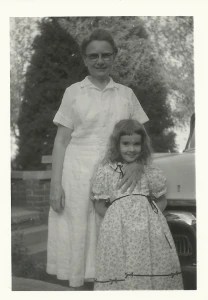
Fishie and I

            And change it was.  That summer he employed a live-in-housekeeper, Mrs. Fish, and when September rolled around, my brother went off to 4th grade while Fishie (as I called her) and I stayed home.

            I remember very little about that year at home except our black and white tv and Captain Kangaroo.  Captain Kangaroo would read me a story every day.  He had puppet friends like Mr. Bunny Rabbit, Mr. Moose, and Miss Frog.  Even though I was not alone, I felt lonely because our neighborhood friends were all at school and I was left behind.  So, I colored page after page in my coloring books, played outside on my red swing set, and had my hour with Captain Kangaroo and his sidekick, Mr. Green Jeans. 

Captain Kangaroo and Mr. Green Jeans

            Time did pass, as it always does, and when the next September came, I went to first grade.  I was as shy and awkward as a new fawn, yet when I met my teacher, Miss Ruth Hooper, I knew I would be safe.  She was a handsome woman, standing six feet tall in her functional black flats.  A ‘spinster,’ as my dad would say, and more than capable of corralling a feisty group of six-year-olds.  In fact, Miss Ruth Hooper ruled with an iron hand and a soft heart.

            Miss Hooper understood my gangly ways.  Having been a tall girl herself, she could feel my angst at being the tallest child in the class.  She knew what I was going through with my abnormally long arms and legs.  She was able to nurture that motherless part of me that needed extra care, while attempting to never show favoritism.  And even though Miss Ruth Hooper never married or had a child of her own,  she was just what I needed when I needed it the most.

            At seventy-two years old, I can now look back and confidently say that I turned out okay for never going to kindergarten.  Somehow, I caught up with my colors, and numbers and memorizing the months of the year, but occasionally I like to use it as a crutch.  At family gatherings if I am slow to catch on to a joke, or have trouble finding 18% of a number or even when I just plain need an excuse… “well, after all, I didn’t get to go to kindergarten,”  and everyone will just nod and accept that as the reason I am the way I am.

            I find it no coincidence that during my professional career in education, I was lucky enough to teach kindergarten for seven years.  In spite of the fact that I never got to go myself, I enjoyed every part of teaching that formative year.  I relished the songs, found wonder in a growing lima bean seed and learned right along with the children about community helpers, insects, and farms.  I have taught hundreds of children the alphabet and seen their faces light up when sounding out a word.  I have held many a tiny hand in mine as we attempted to walk in a straight line in the hallway.  I have more than made up for that one year I spent at home with Fishie and Captain Kangaroo.  Lucky me, in so many ways.

            “Warm cookies and cold milk are good for you.  Live a balanced life.  Learn some and think some and draw and paint and sing and dance and play and work every day some.  And when you go out into the world, watch out for traffic, hold hands, and stick together.”  Amen.
Posted in #Confessions, #Teaching, Contemplations, Relationships, Teaching

The Long Year

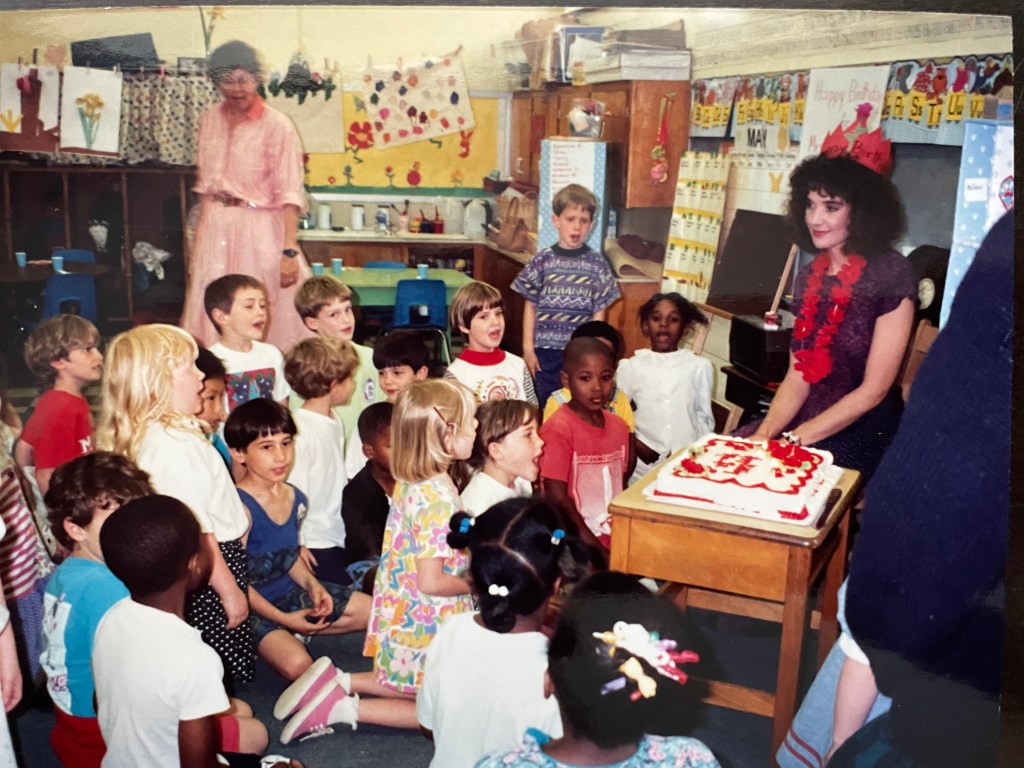
My Honeybee’s singing Happy Birthday

            For one long-fast year of my life, I taught kindergarten in Chapel Hill, North Carolina.

Estes Hills Elementary School was nestled in a mixture of pine and oak trees and was an older school with character, and lots of other characters who worked there.  Each of the classrooms had a back door that opened into a lush courtyard and a front door that lead to a winding sidewalk that circled the school.

The year was 1991 and was one of the most interesting, AKA hard, years of my adult life.  1991 involved a marriage, a move to North Carolina from Texas, a job change and a pending divorce.  1991 was dashed dreams, sour grapes, and a river of tears all rolled into one.  Twelve months of shock and awe.  365 days of “What the hell?”, yet there was a calm, deliberate sweetness that awaited me every morning when I greeted my 25 little charges.  Estes Hills and the 25 Honeybees (our class nickname) gave me purpose and life.

Estes Hils was a neighborhood school that was also near The University of North Carolina.  Many professors’ children attended our school and for that reason, most of the teaching staff was a mature, seasoned group, able to provide the level of learning our clientele demanded.  Each teacher was assigned a teacher assistant to help facilitate classroom learning and discipline.

I was one of several kindergarten teachers that year, and we were each assigned 25 students.  While you may not think 25 students is a lot, 25 five-year-olds is.

My students were eclectic, coming from varied backgrounds and nationalities.  One such student, a handsome little boy named Xolani, came from Africa and had a click language dialect.  While he spoke perfect English, his P sounds had a click, which made his language both fascinating to listen to, and hard to understand.

My teacher assistant, Violet, had her master’s degree in art.  Every day she planned an art project for our students and during that hour, she took over and I assisted.  She was talented, creative, and best of all, patient with a great sense of humor. 

Being new to this school that was so steeped in tradition and culture was like being drop kicked through the goalpost of life into another era.  It didn’t help that I was from Texas.  The North Carolinian women were Berkenstock wearing, clean faced southerners who sounded like they used a question mark at the end of every sentence, with slow paced, elongated v o w e l s.  And even though I had the usual slow, Texas drawl, they proceeded to make fun of my y’all’s and fixin to’s, like I was the one with an accent.

It didn’t help that in 1991 I was still sporting big hair, red lipstick and against the wholesome scrubbed look of the other teachers, I looked, well… a little on the trashy side.  A little too made up for their taste.

            “You Texans,” and they would just shake their heads.

            “You Texans think everything is bigger in Texas.”

            Quite frankly, my self-esteem was already in the toilet because of my horrible, no good, very bad year. But it was hard to make friends, and by the third day of school, I was feeling like the Lone Texas Ranger and would probably be eating lunch by myself for the rest of my life.

            But on the fourth day, my back door swung open and the teacher from two doors down popped his head in.

            “Hey, Miss Texas, want to join us for lunch?” Bryon asked.

            And a friendship was made.

            Bryon and Chris were the two gay teachers from two doors down.  They were charming, hysterically funny and comforted my shaky soul like a bowl of chicken and dumplings.  We ate lunch together, chatted at recess and they even invited me to some of their fabulous weekend parties.  At a time when I felt very little mercy from life, they gifted me friendship and laughter.  And when the end of school came, and the end of my marriage, Bryon and Chris helped me load my U-Haul trailer for the long drive back to Texas. 

My 25 Honeybees were sweet with not a stinger among them. The parents and students even surprised me with a cake and gifts on my thirty-ninth birthday, and as their joyful voices sang happy birthday, I held back tears from the sheer preciousness of that moment.

 One particular day I was leading a lesson about North Carolina as a state, and we were coloring pictures of the flag.

One student raised his hand and asked, “Teacher?”

“Yes, Samuel,” I said.

“Are you a Democrat or a Puerto Rican?”

“You mean Republican?” I asked.

“No,” and he shook his head, “I’m pretty sure its Puerto Rican.”

“Well, which one are you?”  I asked.

“Oh, I’m black,” he said

“Cool.” I answered.  And I gave him a big hug.

The hug seemed to suffice him as an answer, and we finished coloring in silence.

My long-fast year in North Carolina was a blessing in so many ways.  I found out that some people aren’t who they say they are, and that actions really do speak louder than words.  I learned it’s ok to be from Texas and proud of it.  I marveled at the resilience of the human spirit and the inherit kindness that restored my faith in man.  And with great fondness, I remember 25 little Honeybees who needed me as much as I needed them.

Posted in #Confessions, #Teaching, Growing up, Relationships, Teaching, Truth

Understanding  by Ginger Keller Gannaway

After I secured my MA in English at LSU in 1980, I took a teaching position at an un-air-conditioned elementary school north of Baton Rouge. As a Language Development teacher I was part of a state program that helped children who were “culturally deprived.” I gave no grades and used puppets and a small record player to sing songs as we worked on vocabulary building, letter recognition, and basic reading skills. I worked with small groups of kids between 5-7 years old who came to me for 30-minute classes each day.

My Elementary School Kids


The school was a long building in the countryside with one classroom for each grade (K thru 8). Recess time for kindergarteners was in a small field next to a fenced area of cows. The mooing of our bovine neighbors mixed with the whirr of electric fans. The population was 98.9% African-American. I remember an extra tall kindergarten boy who was “mixed” and one pale, blonde second grader.

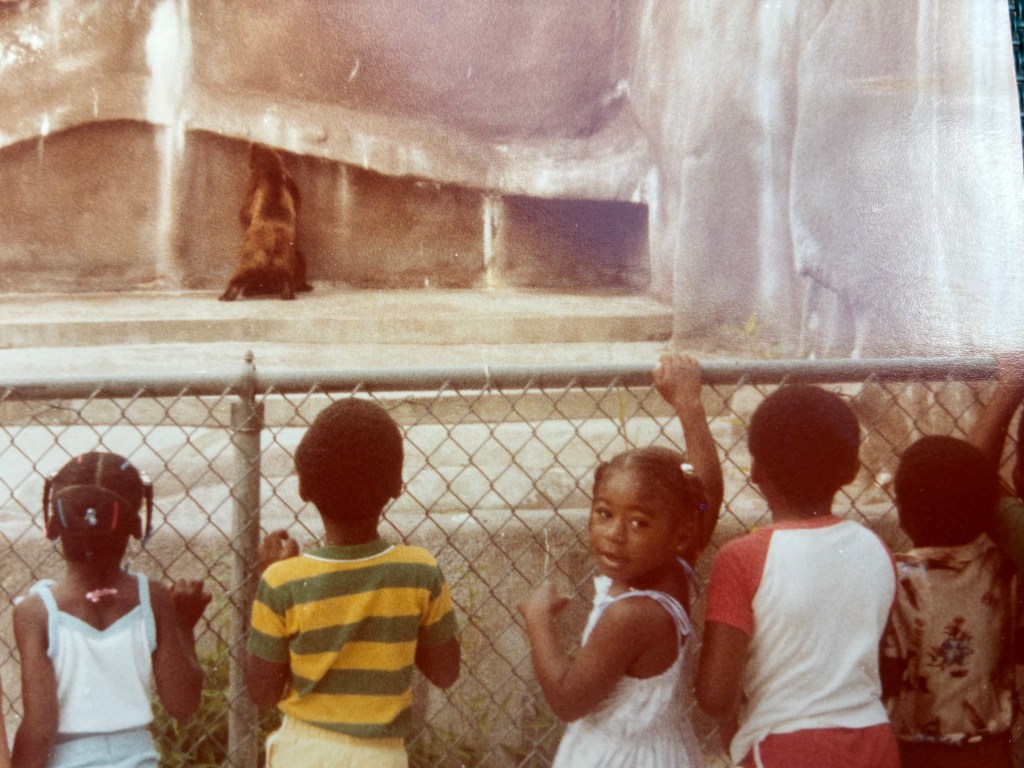
My students spent most of their lives in the rural area they called home. When we took the kindergarteners for a field trip to Baton Rouge, the biggest Wow! was the escalator at the mall where we had lunch. A few five-year-olds needed help getting on and off the moving stairs, but others wanted to ride up and down more times than they could count.

I became friends with Molly, the kindergarten teacher, because I worked with her whole class, and we shared lunch while her kids napped on dark blue mats. I helped her color 3-foot high cardboard cut-outs of the Alphabet Kids. I loved coloring as we chatted. I knew the kindergarten class best since I only worked with a few first and second graders.

Our zoo field trip

I remember David who rarely slept on his blue mat. He stayed quiet while  squirming and searching the room for another wakeful peer; however, all the other kids had entered the Land of Nod. I smiled often at Sammy, a chubby boy who was first to fall asleep flat on his back with his mouth half- open to make him appear more vulnerable than those who curled into balls or hugged a treasured stuffed animal from home. Sammy was a cute, yet tough bundle of energy when he wasn’t napping. He had a husky laugh and lots of friends. When I had Sammy in my class he sang confidently during the puppet songs and I believed we got along like cheese and crackers.

One humid afternoon I helped Molly with a line of five-year-olds as they waited for the school bus or a parent to take them home. (Kindergarten got out an hour earlier than the rest of the school). Each child had a note pinned to his/her shirt with details about our upcoming field trip. Sammy was kicking up gravel as he waited. I smiled at him and squatted to be eye-level. “Sammy, you excited about going to Baton Rouge next week?”


He continued kicking pebbles and surprised me with, “Momma told me don’t trust a white person farther than I can throw ‘em.”

Maybe he had seen his mother’s car pull up and didn’t want to be caught talking to me. Maybe I had corrected his pronunciation in my class earlier that day. In a moment Sammy went from being a student I felt comfortable with to someone I didn’t know.

For the first time I felt a smidgen of judgement based on the color of my skin. I never had a run-in with any parent that school year. I got only positive feedback from my principal. I thought I was a decent elementary teacher, even if my diploma said “Secondary School English.” But Sammy made me face the separation of races in Louisiana in the 1980s. I did not think I held prejudice in my heart. However, I grew up around racism in my hometown. Sammy’s mother’s beliefs came from her own experiences, and she was teaching her son how to navigate the world she lived in. 

Back then no one used the triggering term “woke,” but Sammy opened me to living Atticus Finch’s advice in To Kill a Mockingbird– “You never really understand another person until you consider things from his point of view…until you climb into his skin and walk around in it.” 

I had a sheltered upbringing when it came to other cultures. My segregated hometown and a Catholic school education kept me ignorant in some ways. I thought I trusted, accepted, and understood people from different races. But teaching in several schools with diverse populations, I got “schooled” by my students and their families. And teaching teens with lives so unlike my own made me a better person.

The quote “Be a person on whom nothing is lost” by Henry James helps me seek new ways to understand other people and to accept our differences.  I will never understand prejudice the way those who lived it have, yet I can be open-minded to their ideas and accept them for who they are…..even if they don’t trust me.

Posted in #Confessions, #Teaching

WWJD

            It was April, nearing the end of school, and the air hung low while the tensions ran high.  The humidity outside made sweat bead up on my top lip and my clothes feel like I was wearing a wet diaper.  And while I tried to start each day fresh and dressed to the 9’s, I ended these muggy days as barely a 3.8.

            Lunchtime is always hectic at a large urban high school, and on this day at Crockett High School, as an Assistant Principal, I was outside patrolling the back of the school.  Only seniors were allowed to leave for lunch, but of course we knew that was a rule followed by few.  Complaints had come in from teachers hearing cars spinning out from that back parking area by the tennis courts, along with loud music and the occasional waft of smoke; cigarettes and other smokables.

            Crockett high school is a beautiful campus and backs up to Garrison Park, a neighborhood park with baseball fields and a swimming pool.  Unfortunately, some students liked to take long lunches or skip classes and hang out in the park where nothing, but no-good shenanigans would take place.

            On this particular day, the SRO, School Resource Officer, had suggested that two AP’s be on the lookout for a late model, rusty blue chevy, with three male, non-students, inside.  It had been reported that these guys were trying to pick up girls from that parking area behind the school.  It had also been reported that they were blasting their music with loud, low bass thump, thump, thumps, disturbing classes while they waited for the girls to come out.

            Another female AP, Ms. Wilson, and I were positioned in that back area by the park.  We walked around, turning under-classmen back toward the school, while keeping an eye out for our rusty blue chevy.  As we circled around, we spotted our three guys, parked under some trees, music thumping and a faint smell of marijuana floating through the air.  They didn’t see us as we lurked behind the dumpster.

            “Officer Smith, we spotted the blue chevy,” I whispered over the radio.

            “10-4.  I’ll be right there,” the SRO answered.

            When he arrived at the dumpster, the SRO, Ms. Wilson, and I made our plan of attack.

            “The bell rings in 4 minutes, we should wait until the bell rings then nab them just as the girls are approaching the car,” Ms. Wilson said.

            “No, it might be too crowded with kids coming out for lunch.  Besides, they’re smoking joints right here on school property.  We should call for back up,” I suggested.

            And before we could finalize a plan, all hell broke loose.

            Two girls came out of the back door of the school three minutes before the bell rang and were looking left and right for the car.  The blue chevy boys saw the girls and turned up the thump, thump music and put the car in drive.

            Without a real plan, the SRO, Ms. Wilson, and I sprang into action.  The SRO took off toward the opposite end of the drive to set up a road block.  Ms. Wilson and I waited by the dumpster because the car had to come down that way to turn around and get out of the driveway.  As the car approached, we stepped out yelling for the car to stop.

            “Hey guys, stop right there,” I yelled, and I saw out of the corner of my eye, the girls start running toward the park.  I heard Ms. Wilson say, “Well s!*#”,  and take off running after them. Now, Ms. Wilson was a tall, big boned woman, dressed in a smart looking, purple colored knee-length shift, wearing mid-heeled espadrille sandals, so this was no track star chasing the students, but her commitment to the challenge was unmatched.

I knew I had to get this car to stop, so I stepped in front of it.

            “Are you crazy lady?  Get out of the way,” one of the boys yelled.

            “Hey man, let me see your school ID,” I told the driver, knowing full well these three hooligans were not students.

            “We’re just picking up my sister,” he said as he started to turn the car away from me.

            In a reflex action, I grabbed his arm, which was hanging out of the smoke filled, thump, thump, rusted blue chevy.  “Stop!” I yelled and for some unknown reason, he did.

            I still had my hand on his arm even as the car slowed and finally stopped, and as I glanced down at his arm I saw a yellow band on his wrist with “WWJD?”  And I lost it!

            “What would Jesus do?,” I hollered at him.  “What would Jesus do?  Not smoke pot and pick up underage girls!!!” I hissed.  “Jesus would definitely not do that.”

            “Let go of my arm, lady, you’re crazy!” And the car started to go.

            In a split second, I knew I had a decision to make. I couldn’t hold on to his arm and run beside a speeding car, but for some reason I didn’t let go of his arm.  I started to jog beside the car and then finally let go as he tried to roll the window up.  When I suddenly looked up I saw a police car parked, blocking their exit.  (Not a minute too soon.) 

I don’t know how she did it, but Ms. Wilson brought the girls back to campus and we called their parents.  The boys went with the police, and the smoke filled, rusted, thump, thump blue chevy got towed.  April turned into May and school was finally out, but not before I had a little time to reflect on that yellow wrist band.

            Maybe our wanna be thug/pot smoker had a devil and an angel sitting on his shoulders.  On one hand he wondered, what would Jesus do, and on the other he just wanted to live his best life out on the streets.  It’s definitely a conundrum as old as the ages, and it was definitely one day in my life as an assistant principal that I will never forget.

Posted in #Teaching, Teaching

WELCOME TO THE JUNGLE! by Ginger Keller Gannaway


Back in 2004 I was teaching AP English IV at Crockett High School. My seniors took their AP Exam in early May. We had studied Joseph Conrad’s The Heart of Darkness the weeks before the big exam. I had told them, “This book is only 90 pages long; however, it will be the most challenging book you’ve ever read.”

Some sentences meandered for three quarters of a page, and Conrad smashed the dialogue between different characters into a single paragraph. Conrad helped readers feel the confusion and danger of taking an old steamboat down the Congo River in 1834. The paragraphs were as dense as the jungle, and the characters’ secrets were as dark as their greed. Also, the narrator’s story got more menacing as he got closer to Mr. Kurtz, the ivory merchant he was supposed to take out of the jungle.

While my senior classes endured their 3-hour morning AP exam, I realized that my afternoon classes would be in no shape to study literature that day. My video about free verse poetry and the short story with a surprise ending would hold no one’s interest. Their hands would be tired after writing three literary essays, and their brains would be fried after the exam’s grueling multiple choice section. 

My well-used copy of the book

During lunchtime I went to the teacher lounge and noticed two large rolls of colored paper in the supply closet – the kind of paper we used to cover bulletin boards or let students make projects with. One roll was green and the other was brown. An idea emerged. I grabbed a box of scissors and a few rolls of masking tape. With ten minutes left of my lunch, I hurried to the art classes downstairs and borrowed a large roll of blue paper and one of black from my favorite art teacher.

She asked, “What are you making?” 

I looked at her and smiled. “A jungle!”
Being open-minded, supportive, and cool, she asked no questions and had two art students carry the paper rolls upstairs to my classroom.

My seniors came to class both tired and energized. Some wanted to talk about the AP Exam (which violated the form they had signed to not discuss test details with anyone). Others were hoping for a movie to watch, and maybe one or two came in thinking we might analyze a poem.

I surprised all with, “Today we’re turning our classroom into the Heart of Darkness Jungle!”

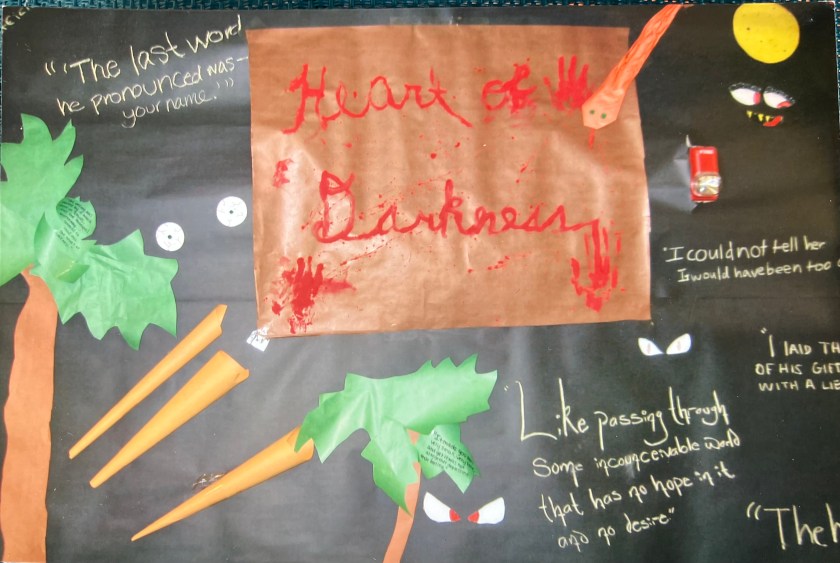
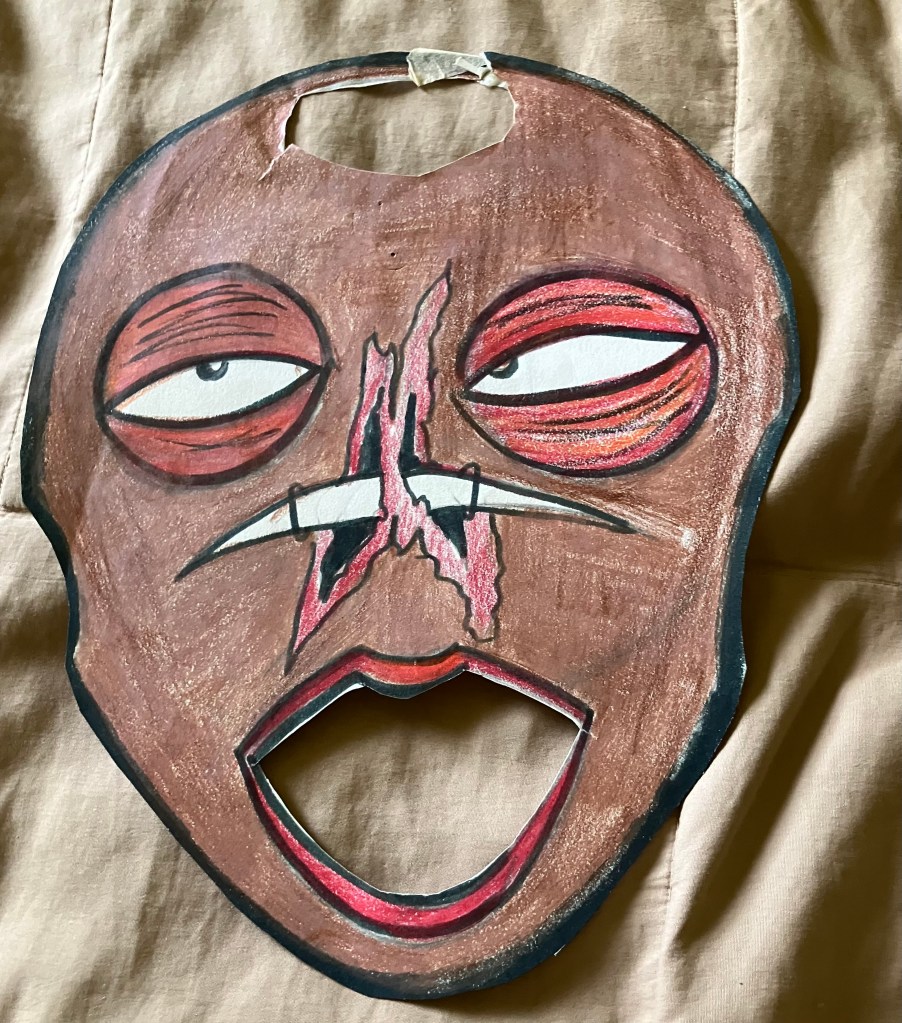
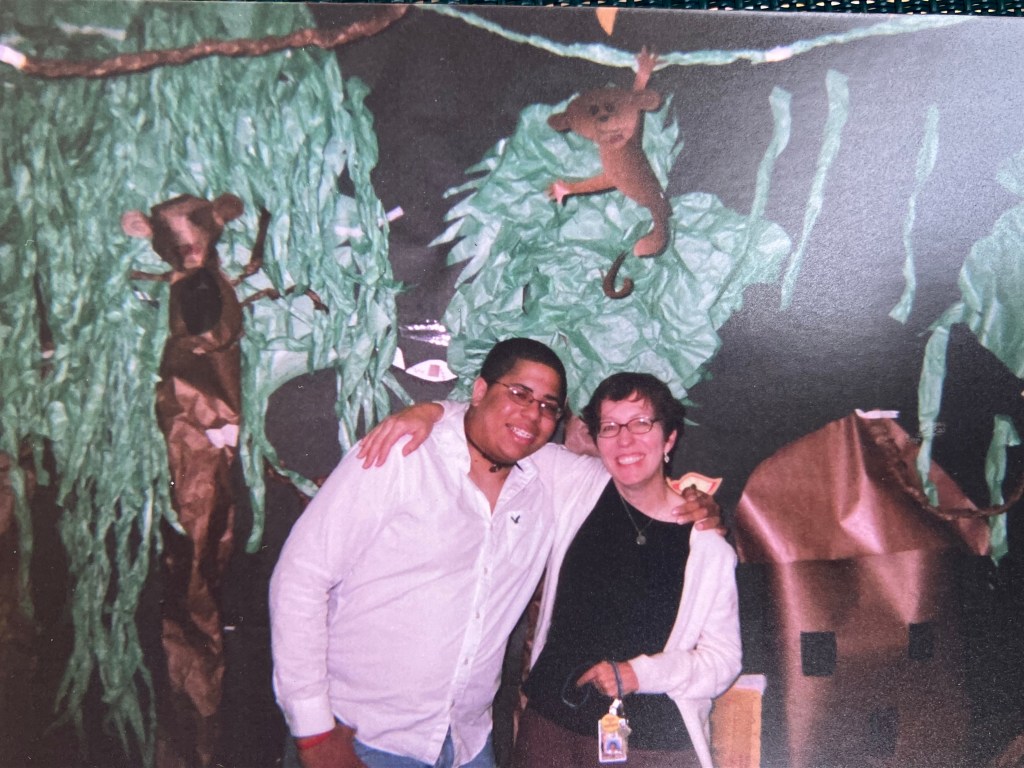
First, we brainstormed setting details from Heart of Darkness. They mentioned the Congo River, the steam boat, Krutz’s cabin in the jungle, and the severed heads on poles used to ward off intruders. We decided to use the green, black, and brown paper to make trees and vines to suggest the jungle, the blue for the river, and white to draw the boat and the main characters. 

All got into the jungle idea. I told them they had to join a group: Vine Makers, River Workers, Steamboat Builders, and Hut Makers. A few asked if they could make the heads on poles. To receive a 100 for the day’s assignment each student had to help build the jungle and to add a quote from Heart of Darkness. My students worked like large elves on Christmas Eve. Someone even used my computer to blast the song, “The Lion Sleeps Tonight” as we worked.

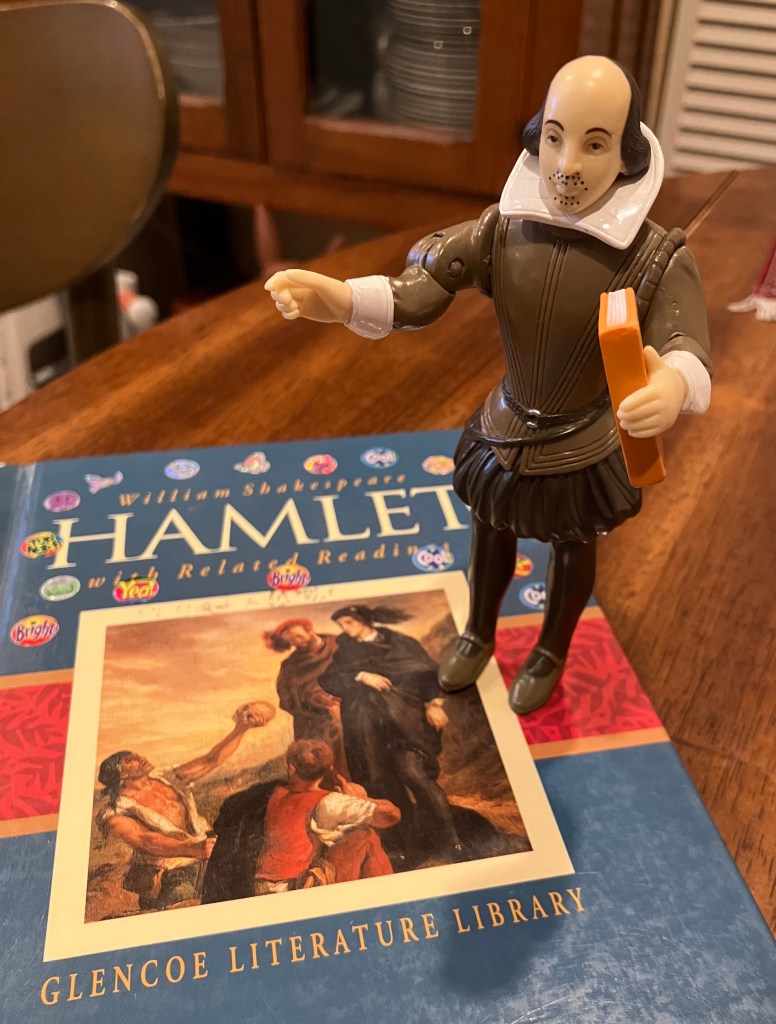
As as an experienced teacher, I’ve had successes some days. Sometimes students really enjoy discussing a thought-provoking story like “The Ones Who Walk Away from Omelas”; or they give star performances of a Hamlet soliloquy; or they cry at the end of Elie Wiesel’s Night. However, so many of my seniors loved building the jungle that the next year I let my sophomores contribute to the jungle by adding details from The Lord of the Flies. One student decided the entrance way needed a waterfall, so people had to push aside the long strips of blue paper as they came to class. Some of my peers told me they’d hate so much chaos and mess in their classroom, but I learned to embrace the wild spirits and high energy of my students.

After a few years of building jungles, I had my coolest teacher buddies (Paul & Janie), who also taught Heart of Darkness, build their own jungles. And the groovy art teacher would visit our classes and give a certificate for “The Best Jungle.” I did not win that certificate, but I did have future students (freshmen, sophomores, juniors, and seniors) come to the very first day of school and say, “Hey, Miss, when are we gonna make a jungle in your class?”

Posted in #Confessions, #Teaching

The Healing Power of Marvin Gaye

            In the 1970’s, education experts decided we needed to insert a values curriculum into our daily course work.  Through the years there were various curriculum packages, but one I remember was called, “Values Clarification.”

            Within the school day, usually homeroom period, teachers would use certain guided lessons to help students broach tough topics or situations, and moral dilemmas.  We were encouraged to help students get to know each other on a more personal level, building relationships and creating community.

            The year was 1982, and I was teaching high school Home Economics.  My classes were filled half with students wanting to learn to cook and hoping to sample what was made, and the other half were football players needing an ‘easy’ credit.

            It was the beginning of the semester, and as part of my Values Clarification curriculum, I had asked the students, one at a time, to stand beside their desk, introduce themselves, and tell one special thing about themselves that nobody else knew.

            “My name is Alicia, and I can say the alphabet backwards.  Z, W, X, V, U, T…..”  And the class politely clapped.

            “I’m D’Madre, and I can bench press one hundred pounds.”  And he flexed his muscles while attempting to pick up an empty desk and push it into the air.

            “Whoa, D’Madre,” I said.  “We believe you!” 

            “My name is Celeste, and I can speak English, Spanish, and Portuguese.  Mi ombre es Celeste.  Meu nome e’ Celeste.”  And everyone applauded.

            As we neared the end of the class period I said, “We have time for one more.  Bobby, will you make your introduction and tell us something special about yourself?”

            Bobby Smith stood up.  He was tall, with an athletic build and dark brown eyes.  He had the kind of personality that attracted friends like an ant to a picnic sandwich.

            “My name is Bobby Smith, and I know all the words to the song, ‘Sexual Healing,” by Marvin Gaye.  Do you want me to sing it?”

            And before I could take a breath, the class erupted into cheers.  He started to dance and hold his ink pen like a microphone.

            “Oh baby, let’s get down tonight.”

            “Oooh baby, I’m hot just like an oven.   I need some lovin.”

            “Bobby!” I said.  “I think…..”

            “Oh Miss, let him finish!  We l o v e this song!”  And two girls jumped up to chime in as backup singers, “wake up, wake up, wake up…”

            “Class!  Stop!  This is really …”

            “I can’t hold it much longer….It’s getting stronger…”

            And just when the class broke into the chorus,  “And when I get that feeling…I want sexual healing.”       

            The bell rang.

            The class filed out of the doorway, and I motioned for Bobby to stay back.

            “Bobby, I think that song was inappropriate for the classroom, don’t you?”

            “Ah, Miss, I understand.  I won’t do it again, but you have to admit, everyone liked it.” And he gave me a winning smile as he left the room.

            I did have to admit, to myself, that it was original, but I silently prayed no one went home saying, “Guess what we learned in Home Economics today?”  And I’m sure I wasn’t the only one who silently played that song over and over in my mind for the rest of the day.

Posted in #Confessions, #Teaching, Aging, Contemplations

Critics        by Ginger Keller Gannaway

Recently Gary said something that made me bust out laughing.  I was leaving to observe a student teacher and said, “I’m worried that I wore this same skirt the last time I observed her class.”

He dismissed my fear with, “Don’t worry. No one will even notice what you’re wearing.”

T-shirt from Crockett High School (my favorite place to teach!)

“What!?” I said. “Teenage girls notice EVERYTHING their teachers wear, say, do, or do not do!”

They criticize pants that don’t fit well, shoes that are worn out, a dress older than their parents are, a necklace, earrings, makeup, or lack of makeup, an unusual pronunciation (even if it’s a word they don’t know), your voice, your posture, your haircut, your car, your lunch, your pet, your children, or even your momma.  Nothing is off-limits. To most teens, teachers give them too much homework but not enough praise. Also, we provide endless chances for them to perfect their criticism skills. 

I remember once wearing one navy sock and one black sock. So I deserved the, “Hey, Miss! Your socks don’t match.”  I also had to claim the, “Why you mixing a pearl earring with your fake diamond one?” And I turned hot sauce red when a usually quiet girl pointed to my left ankle and softly said, “The staple you used on your pants’ hem is about to fall off.” Guilty as charged.

But I didn’t like the observational skills of a fifteen-year-old who stood up in class and pointed to my white shirt’s left pocket and smiled. “Your mustard stain reminds me of my baby sister’s throw up!”

And nothing stings like the, “Hey, Miss! You oughta give whoever cut your hair a minus-one review on Yelp!”

Even the unintentional criticisms can punch your self-image in the face. “Miss! Guess what! You and my great-grandma have the same blue jean skirt.” During my 36 years of teaching, students have been both ruthless and helpful.

I’ve had kids point out lettuce between my teeth many times. The kind ones whisper the problem (“There’s something in your teeth”) while you’re picking up that day’s assignment. The uncouth ones make sure all thirty-four classmates hear them announce, “Hey, Miss, your spinach had a fight with your honeydew at lunch!” 

Some adjectives that were meant to grind down my confidence in my lesson plans have been: “Hey Miss, this book is lame…whack…stupid…sorry ass… boring… sucks… all kinds of wrong… too easy… too hard…awful…lousy…inferior…crummy…basic…cheesy…off…and crappy.”  

One time when my principal observed me teaching, a cute cheerleader passed judgement on my new dress by looking me up and down and slowing shaking her head. Then the fact that my lesson was clever, creative, and engaging meant nothing to me, and the dress I paid way too much for was in our Goodwill bag the next week.

After I turned fifty, the teens’ criticisms made me laugh more often than blush. So what if I got confused when using my room’s “smart board” or messed up streaming video on the doc-cam.

“You’re forgetting to unmute the sound, Miss,” or “Your hyperlink doesn’t open,” did not bother me.

“Hey, Eric, could you sort out my tech issues?” I’d say and all would be well.

And the quips about my crooked glasses, out-of-date clothes, or uncool taste in music did no harm. When someone noticed two inches of my half-slip showing, I could step behind a bookcase and roll up my slip’s waistband as I continued analyzing Shakespeare’s use of figurative language without missing a metaphor. 


I love the line from the Oak Ridge Boys’ song “Leaving Louisiana in the Broad Daylight” — “I gotta roll on between the ditches.” Turning older has made me tough and carefree, where the snarky criticisms not only slide off my back but evaporate into a lavender mist.

Posted in #Confessions, #Teaching

A Teacher’s Lunch

            I have been retired from education for almost fifteen years, yet there are many things about teaching school that seem like it was yesterday.  One such sensory memory is walking into the school, early before the students arrive, and smelling a combination of floor wax, chalk dust and those delicious, fluffy, melt-in-your-mouth, stick-to-your-hips yeast rolls baking in the cafeteria kitchen.  Balm for the soul.
            The last two years I taught kindergarten; our lunch was scheduled for 10:20 a.m.  Imagine going through that cafeteria line smelling some semblance of tacos or pressed chicken patty on a day-old bun.  In reality, I had been smelling this aroma since 7:15 a.m. when I arrived at school.  The cafeteria staff was already busy at work prepping for a sumptuous day of school breakfast and lunch.

            In late August when school began, the children would not be hungry at 10:20 and would often leave half of what their mothers packed or what was on their lunch tray.  By September 15th, we were all hungry by 10:20 a.m. and then practically starving when snack time rolled around mid-afternoon.  Somehow, we all adjusted.

            In 1978, I was pregnant with my youngest daughter, and teaching middle schoolers on Fort Hood, Texas.  Everyday I packed the same lunch.  Everyday I ate the same things:  tuna salad, cup o’noodles soup (aka sodium explosion), and a naval orange.  Oh, and I drank a TAB.  No variations.  It was the ‘70’s, what can I say?  The combination of lead from the canned tuna, sodium from the soup, and chemicals from the TAB were what kept me going!

            As a side note, this was also the year one of my middle school students brought a set of handcuffs to school and tried to cuff my ankle to his.  But that’s a story for another day.

            One year, I ate a package of peanut butter crackers and drank a Diet Coke for lunch every day, both from the school vending machine.  I’m not proud of it, but it was easy.

            The first year I was an administrator at a high school, there were three lunches scheduled to accommodate the nearly 2,500 students. I had lunch duty starting at 11:00 a.m. until 1:55 p.m.  In the beginning of the year, I would bring my lunch, but I soon tired of the soggy turkey sandwiches forgotten from the day before.  My secretary made it her mission to find us something we could eat from the cafeteria and professed that the pressed chicken patty sandwich was the most nutritious and easiest to digest on the go.  So, you guessed it, that year my lunch was chicken patty sandwich and a Diet Coke.

            As an educator, your lunch hour is never an hour.  It is often 30 minutes with the potential for many interruptions.  You learn to eat your sandwich while xeroxing papers.  You drink the same cup of coffee or bottle of water for hours.  You sometimes gulp down your lunch so fast you don’t even remember what you ate, and often you eat your lunch under the prying and sometimes teary eye of a student. 

            As a high school teacher, lunch periods were notoriously times for skirmishes, fights, and less-than-ideal behaviors, so the concept of an uninterrupted lunch seemed foreign. Students wanted to come into your classroom on their lunch period, which was your lunch period, and make up work.

            At middle school, a teacher’s lunch is never her own.  There is always a student who needs extra help or simply needs to talk.  There is always lunch duty.  There is always a meeting to go to.  There is always something else to do besides eat…always.

            And elementary teachers?  Well, they sometimes run on fumes.  Once, when I was teaching kindergarten, my students had just gone to PE, so I was going to eat my lunch in the quietness of the classroom.  I had just opened my lunch sack when I looked up to see a little face peeking in the door.

            “I fell down,” she said, and promptly took a step inside the door to show her bloody knee.

            I opened my arms and said, “Come here, let me look at it,” and she fake hobbled over to my desk.

            “I was just about to eat my lunch,” I said, “but I can wait until I find a Band-Aid for you.  Did you eat all of your lunch?” I asked.

            With tears in her eyes, she nodded yes.  “But I sure do like chips,” she said.

            I slid my baggie of Lays potato chips over to the edge of my desk and a faint smile appeared on her tear-stained face.

            I wiped off her scraped knee and placed a star covered Band-Aid over the hurt.  Tiny fingers inched open the baggie of chips while I got her a cup of water.  I sighed a little as I glanced up to the clock on the wall telling me my thirty minutes was just about up.  “Maybe I can eat my sandwich on the way home this afternoon,” I thought, and just before the bell rang, my little student looked straight up into my eyes and said, “I love you, teacher.”

            “I love you, too.”  I said.

Posted in #Teaching, Confessions, poetry

Who Are You? by Ginger Keller Gannaway

When I consider my 34 years of teaching, I think one of my most important challenges was understanding and supporting each of my teen-aged readers and writers. As an English teacher, I see the task of “getting to know your students” as a Herculean job since we also have to grade and give useful feedback on their essays and research reports.

My students often shared things in their personal narratives that shocked, saddened, or confused me. (And I’m NOT talking about the handwritten scribbles without punctuation or capitalization or the cursive that is so tiny I needed either direct sunlight or a magnifying glass to figure it out). I’m referring to the loneliness, the trauma, the heartaches, and the stress they routinely shared in their essays. I’m remembering the stories that made me cringe, laugh aloud, and cry. I’m remembering the ones that called for an after-class conference or a visit to the school counselor.

 I felt both honored and burdened by their honesty. Since high school teachers often have rosters with 180-plus students, how do we learn their names before back-to-school night?  How do we handle so much angst, joy, depression, immaturity, intelligence, and cynicism without giving up every second of our home lives? And how do I separate each school day’s drama from my family responsibilities? How do I focus on my own children’s needs and forget my students’ issues?

Like the tv series Severance where Lumon employees sever the connection between their work lives and their private lives. A worker’s “innie” doesn’t remember anything about his/her “outie” home life (and vice/versa). Maybe a teacher could cope better if her “outie” forgot all the details of her “innie” life.


I’ve taught over 6,000 students, and I confess I don’t remember every single kid. But so, so many smiles, smirks, glares, and empathetic nods remain. The ones who shared their wisdom and laughter stay with me as much as the ones who made me cry and rush to another teacher or an assistant principal for help. The faces, of course, linger longer than the names.

Here is a short account of one of my students. Using a different name, this is a brief remembrance of an unforgettable freshman at Crockett High School.

Thomas                 

Three weeks into the school year I noticed a freshman’s black and white marbled composition book on my desk atop fat folders of ungraded quizzes – a writing journal without a name and not returned to second period’s designated shelf where even stacks of non-spiral notebooks gave the illusion of order.

I finished writing next period’s agenda on the streaked white board before I flipped through pages of black ink scrawls that made the lined paper curl like those paper-thin red plastic fish that move in your palm and predict the future. The last few pages had more cursive than print and less punctuation. “i sit on the roof & wonder why im even here” made me sit down. I scanned previous lines about “a heart of hurt,” a girl’s “soulful eyes,” a “silence that slices” and a “cold colorless world.”

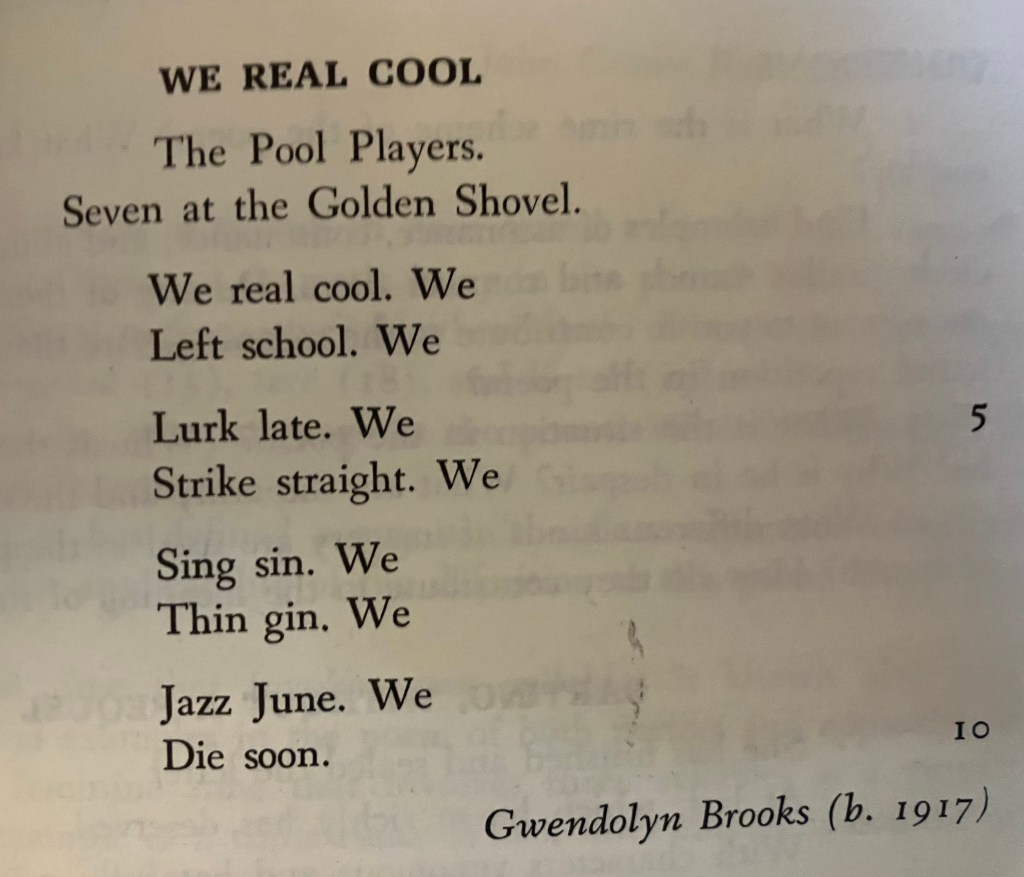
I reread the notebook searching for a specific name. Nothing. I flipped through second period’s quizzes searching for that same hard-pressed ink, minimal punctuation, print/cursive mix, and the lowercase i’s until I held Thomas’s quiz about Gwendolyn Brook’s poem “We Real Cool.” He’d circled the poet’s use of alliteration and underlined “We die soon” six times.

I referred back to Thomas’s journal and touched the words “on the roof” before having the sense to seek help. I rushed downstairs to my favorite counselor’s office. The woman who focused on class schedules and state mandated testing switched to doing what she was trained to do. We compared the journal with the quiz paper and agreed Thomas was the author. A slim boy with wild blond curls and a skateboard stuck out of his backpack. He wore over-sized, faded 80’s rock concert t-shirts and loose black jeans. A mix of grunge and emo. Withdrawn yet observant. Someone who sat in the back row, stared out the window, and usually avoided his 31 classmates. Someone a teacher with 184 students could fail to notice.

My vague answers to the counselor’s specific questions made me squirm. We labeled Thomas a smart student with a “B” average, neither a joiner nor a trouble maker. He melded into crowds of teens struggling to be seen and ignored at the same time.

I thought about next week’s Back-to-School Night when tired parents would come to Crockett High School to trudge up and down stairs and visit eight teachers who might remember half of their students’ names, so the question “How’s my son doing?” was as pointless as “What’s my kid’s blood type?”

By now I had missed my lunch duty and had eight minutes before third period began. The counselor kept the journal and nodded to me while reading details about Thomas’s classes and his family on her computer.

I left her office, walked through the school’s open-air courtyard, and looked up past the massive oaks and concrete steps that led to my second floor classroom. Could Thomas be on the school roof? Or across the street atop the flat tops of the strip mall businesses? Had he gone to the neighboring city park’s rec. center next to an empty swimming pool with a peeling, cracked blue bottom?

At my desk I ate broken Pringles from a plastic baggy. I thought of the one time Thomas had spoken up in class telling a peer to “quit stereotyping the story’s protagonist.” My teacher heart had danced a jig then, but I couldn’t remember the rest of the literary discussion. I thought of Thomas’s extra dark eyes beneath long bleached curls and how he responded to my morning greetings with eye contact and head nods.

The assault of third period’s buzzer-bell sent me to my door to greet 33 teens. My after-lunch sophomores came in loud and messy. Conspiratorial laughs from two girls preceded a running Sam who tossed a bag of Flamin’ Hot Cheetos to Carlos who tugged on a cheerleader’s backpack which made her yell, “Loser!” before swatting at the runner who headed toward a window past short, short Cici who wore headphones and slipped into her desk before putting her head down while a new girl taller than me stopped at my door. New girl’s thin hand with chipped black nail polish held a printout from the attendance office. I gave her a smile and a “Hey there,” took the paper, and pointed to my last empty desk. When Gabriella began passing out the black and white journals, I forgot which chapter of Animal Farm we were on because all my head could do was scan rooftops for a fourteen-year-old boy I hardly knew.  

Note to readers:  The school counselor did locate Thomas off-campus that day. He was hanging out in Garrison Park and despite his broken heart he was fine. She talked with him, but I never confronted him about the “sitting on the roof” drama. He passed freshman English and graduated a few years later. I have no further info. but I hope he remembers some of the literature we talked about like I’ll always remember the panic I felt about the journal he had left on my desk and my flawed attempt at “getting to know my students.”

Posted in #Confessions, #Teaching

A Room With A View

            Just like everyone in the corporate world wants a corner office with widows, every school teacher wants the perfect classroom. Perfection is of course, according to the individual, but I can guarantee that every teacher wants a classroom with a working thermostat, the correct number of tables and desks, a filing cabinet that locks, and is in close proximity to the restrooms.

            My career in education lasted thirty-six years, seven of which were teaching kindergarten. During my seven years in kindergarten, I was lucky enough to have the perfect room two years in a row.  Room 102 was the most coveted room of the school and had not even come available until the tenured teacher who inhabited that room finally retired.

            Even though I’m pretty sure it was luck, I felt like royalty the minute I found out I would be moving into room 102.  It was like Kensington Palace and The Taj Mahal met Clifton Park Elementary School.  I felt like the Queen, or at very least, a lottery winner.

            As you stood in front of the school, it appeared to be in  L shape.  My classroom, number 102, was the second room at the beginning of the L.  By school standards, it was spacious.  My classroom had one whole wall of windows with a wide window sill and bookshelves underneath.  The windows looked out onto the front of the building, and we could see the flagpole, and every visitor who parked and walked into the front office.  The light coming in from the windows was so fantastic that I rarely had to turn on those loud, garish fluorescent lights.

            Room 102 had a wall full of closet storage opposite the bank of windows and shared a boys and girls restroom with classroom 101.  Our rooms were close to the cafeteria, easy outside access for fire drills, close to the custodian’s closet for those accidental accidents, and close to the outside door for recess.  For a kindergarten teacher this is prime real estate on the boardwalk of life.

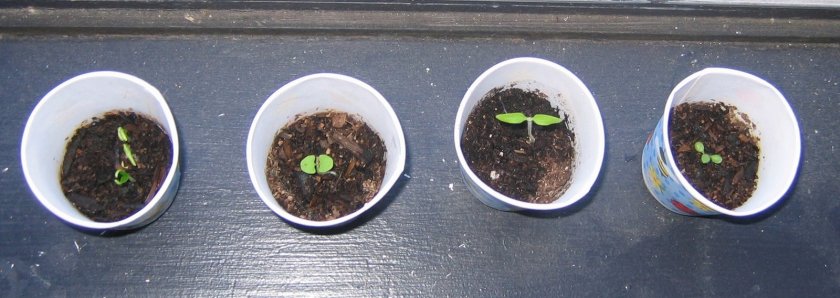
            I had big plans for room 102 and the huge window sills.  During the spring seed unit, I could envision twenty lima bean seeds, planted in Dixie cups, lining the sill.  My students would have the tallest sprouts, and every child’s plant would grow with all of the natural light.  Spring seed unit would be every child’s favorite, and I would be smug knowing our classroom ruled!

            In the fall when the firemen came to teach us ‘stop, drop, and roll,’ we would be the first classroom to see the fire engine pull into the parking lot.  In fact, when anyone arrived or left school we could potentially be the first to know.

            However, in life there is a yin for every yang, and a pro for every con, and room 102 turned out to be such a contradiction.  If room 102 could talk, it would remember the day Mrs. Flintcraft parked her big, peach colored Buick in front of the school to bring her son’s forgotten lunch box.  She parked and hopped out of the car and as she walked down the long sidewalk, past the flagpole, and into the building; five other students and I, who were in my reading circle, saw that Mrs. Flintcraft had the back of her yellow, spring dress tucked into her pantyhose, exposing all of her goods, so to speak.

            My reading center was a horseshoe shaped table with five chairs.

            I glanced at my five ‘readers’ and all of us had wide, surprised eyes. 

            “Her underwear is showing,” one little girl reported.

            “It sure is,”  I said.  “Maybe I should go tell her.”

            And about that time, Mrs. Flintcraft came back out of the front door, down the sidewalk, past the flagpole, to her car with her yellow spring dress untucked.

            “I think someone told her,” another student said.  And we all got back on task.

            The allure of classroom 102 and being close to the front office, wore off pretty fast.  I realized the principal liked to pop by with visitors wanting a tour of the school.  I would look up during a lesson, and my principal would be standing in the doorway with a school board member or a parent.  “Do you mind if we observe for a little while?” he would ask.

            “Of course not.  Come on in.”  I would say, while I silently prayed I could keep my twenty, five-year-olds under some semblance of control.

            “Organized chaos!” my principal would say.  “Your classroom is so much fun to visit.”

            My dream of the superior lima bean plants disappeared one Monday when we arrived at school to find half of the plants had grown too much and toppled over, while the other half burned up because of too much sun.  Upon this terrible discovery there were many tears, questions, and meltdowns. The wall of windows turned out to be too much heat for our delicate seeds and we had to start over, which meant planting seeds during the spring farm animal unit.  I was losing momentum. 

Have I mentioned the ant farm?  Let me say that sometimes a five-year-old is not as responsible as we might wish. Sometimes little fingers touch things or move things and do not put them back.  Like the top of the ant farm.   On our classroom chore list, one item is labeled: Ant Farmer.  The Ant Farmer is to check the ant farm every day to make sure everything is running smoothly.  No escaping ants, no dying ants, etc.  However, one day..

“Teacher!!  Come quick! Somebody took the lid off and didn’t put it on all the way.   The ants are gone!”  my Ant Farmer said.

“Maybe they are sleeping or hiding in the dirt,” I suggested.

“I don’t think so,” another student said.  “I see them going out the window.  See?  Look! Our ants are lining up to go outside!”

My first instinct was to grab the bug spray, but I knew this might be a delicate situation, so we built a suspension bridge out of popsicle sticks and lured the line of ants, or what was left of them, back into their glass farmhouse. 

I made a vow to myself that next year I would try a worm farm instead of ants.

That outside door that was so near our classroom became a source of contention.  We could hear all the classrooms going out to recess and coming in from recess.  At various times during the day, we could hear that heavy, metal door clink shut.  It was just a reminder that someone was having recess, and we weren’t.

The huge wall of windows that I loved so much were hard to cover when we were showing a film strip.   They were drafty in the winter and smoldering in the spring.  And as much as we enjoyed looking out at the comings and goings of the school…they enjoyed looking in on us.  Occasionally we would look up to kids waving to us from outside.  Or we would see the face of an older sibling pressed flat into the window looking for their brother or sister.

There were good days and bad days in room 102 but by and large I did feel like a rock star for those two years.  I was living the dream, challenging young minds, creating a strong foundation for learning, and I had a room with a view.  It doesn’t get much better than that.